

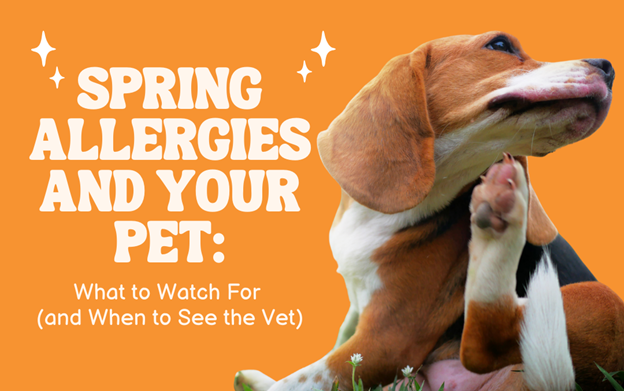
Here in Rouse Hill, we’re already seeing more dogs and cats come in with itchy skin, red ears, and watery eyes as the warmer weather sets in. Allergies tend to flare up in spring because of higher pollen counts, longer grass, and increased flea activity. For pets with existing sensitivities — like my dog Elmo — this season can be especially tough.
Ignoring spring allergy symptoms can quickly make things worse. That innocent bit of paw licking can progress to raw, infected skin. Ear scratching can turn into painful infections. Allergies don’t just go away on their own — and pets who are left untreated often spend the season miserable.
The silver lining is that allergies can be managed with the right plan. Early intervention can prevent secondary infections, reduce your pet’s discomfort, and help them actually enjoy springtime. With the right support, your pet can get back to sniffing the flowers (without itching because of them).
Many pet owners assume allergies only show up as sneezing or runny eyes. In reality, the most common signs are skin-related — things like paw chewing, belly rashes, or recurrent ear issues. Another myth? Pets will “grow out of it.” Unfortunately, most allergies are lifelong, but with proper management, they don’t need to control your pet’s quality of life.
What to Watch for in Spring (and When to See the Vet):
- Excessive licking or chewing at paws – especially if it keeps them up at night.
- Red or inflamed ears – a sign an infection may already be brewing.
- Itchy belly or armpits – often overlooked until skin becomes raw.
- Frequent head shaking – can mean ear discomfort or infection.
- Watery eyes or sneezing – less common but still possible.
- Hair loss or bald patches – usually from constant scratching or overgrooming.
👉 When to see the vet: If your pet’s itchiness lasts more than a few days, if their skin looks red or broken, or if they’re losing sleep (and keeping you awake too!), it’s time for a check-up. The sooner we step in, the easier it is to stop allergies before they turn into painful infections.

Elmo’s Spring Routine:
Every September, Elmo starts his own spring ritual — obsessively licking between his toes. By October, he’d be scratching his belly and rolling around like a mad thing if we didn’t step in. These days, with his allergy plan in place, we know the signs to watch for. As soon as the paw licking starts, we get him back onto anti-itch medication. It keeps him comfortable and saves us from midnight scratching marathons.
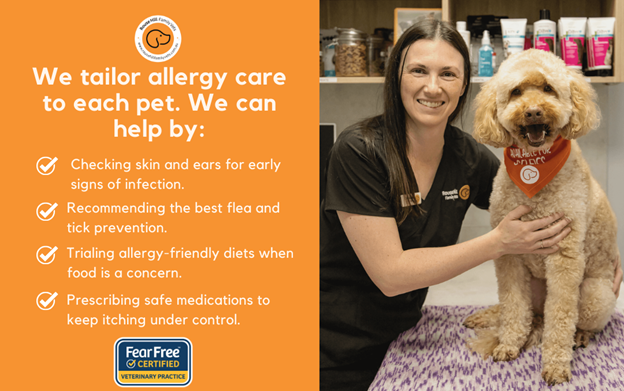
At Rouse Hill Family Vets, we tailor allergy care to each pet. Our Fear Free certified team can help by:
- Checking skin and ears for early signs of infection.
- Recommending the best flea and tick prevention.
- Trialling allergy-friendly diets when food is a concern.
- Prescribing safe medications to keep itching under control.
If your pet is showing signs of spring allergies, don’t wait until the scratching gets out of hand. Book a check-up with us today. Call 02 9086 9130, book online at www.rousehillfamilyvets.com.au
Spring should be a joyful season for everyone in the family — pets included. With the right care, your furry friend can enjoy the sunshine without the scratch.
Warm regards,
Dr Belinda
