

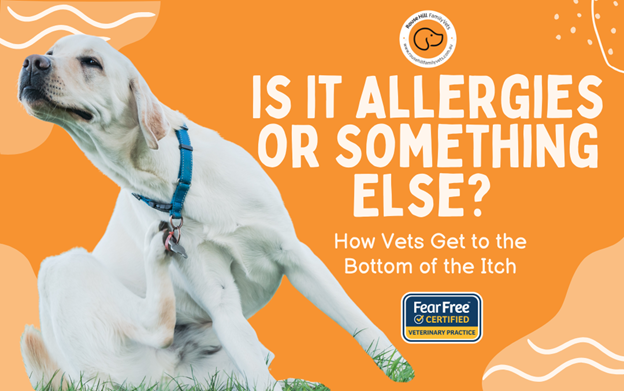
At Rouse Hill Family Vets, we’ve seen plenty of itchy pets lately. From paw licking and red ears to patchy hair loss, many pet parents assume the culprit is allergies — and sometimes it is. But often, the story is a little more complicated. Fleas, mites, infections, and even hormonal conditions can all look like allergies at first glance. That’s why a thorough workup matters.
If we assume it’s “just allergies” without proper testing, pets may continue to suffer while the real problem goes untreated. An ear infection left unchecked can cause permanent damage. A flea allergy can spiral into widespread skin infections. And if it is atopy (environmental allergy), without a plan in place, your pet may endure months of discomfort every year.
When we do the detective work properly, we can identify the true cause of the itch and tailor a treatment plan that actually works. That means a happier pet, a calmer household, and no more late-night scratching marathons.
One common myth is that vets can diagnose allergies just by “looking.” In reality, the skin is an expert trickster — the same red rash could be fleas, food intolerance, or atopy. Getting to the bottom of the itch takes careful steps, not guesswork.
How Vets Get to the Bottom of the Itch:
Here’s a peek at the process we use:
- Step 1: Rule out parasites – even if you don’t see fleas, one bite can trigger a severe allergic reaction.
- Step 2: Check for infection – skin and ear swabs can reveal yeast or bacteria.
- Step 3: Look for underlying issues – thyroid disease or other hormonal problems can cause hair loss and itching.
- Step 4: Allergy testing or food trials – if fleas and infections are ruled out, we may try a prescription diet trial or discuss blood/skin tests for atopy (environmental allergies).
- Step 5: Build a long-term management plan – once we know what’s driving the itch, we put together a personalised plan to keep your pet comfortable.

Elmo the Mystery Scratcher:
When my own dog Elmo first started scratching, I assumed it was just spring pollen. But a closer look revealed he had an ear infection. Once we treated that, the scratching settled — but the following year, his atopy showed itself again. Now, with a clear plan in place, we know what’s allergy, what’s infection, and what needs treatment right away.
At Rouse Hill Family Vets, our Fear Free certified team takes the detective work seriously. We offer:
- Thorough skin and ear exams (including swabs and cytology).
- Parasite prevention programs.
- Food trials with prescription diets.
- Long-term allergy management for pets with atopy.

✨ Special Offer: For September only, we’re offering $50 off annual flea & tick injections for dogs — helping protect against one of the most common allergy triggers.
If your pet can’t stop scratching, don’t guess at the cause. Let us do the detective work. Call 02 9086 9130, book online at www.rousehillfamilyvets.com.au, or visit us at 10/591 Withers Road, Rouse Hill NSW 2155. You can also connect with us on Instagram and Facebook @rousehillfamilyvets for more pet care insights.

Warmly,
Dr Belinda
