

As dogs get older, it’s common to see them slow down a little. But slowing down doesn’t mean stopping. In fact, gentle, regular exercise is one of the best ways to keep your senior dog comfortable, happy, and mobile for years to come.
The great news? You don’t need fancy equipment or long workouts. A few simple exercises at home can make a huge difference.
Here are four easy ways you can help your ageing dog stay strong and flexible — straight from our rehab team at Rouse Hill Family Vets.
1. Cookie Stretches
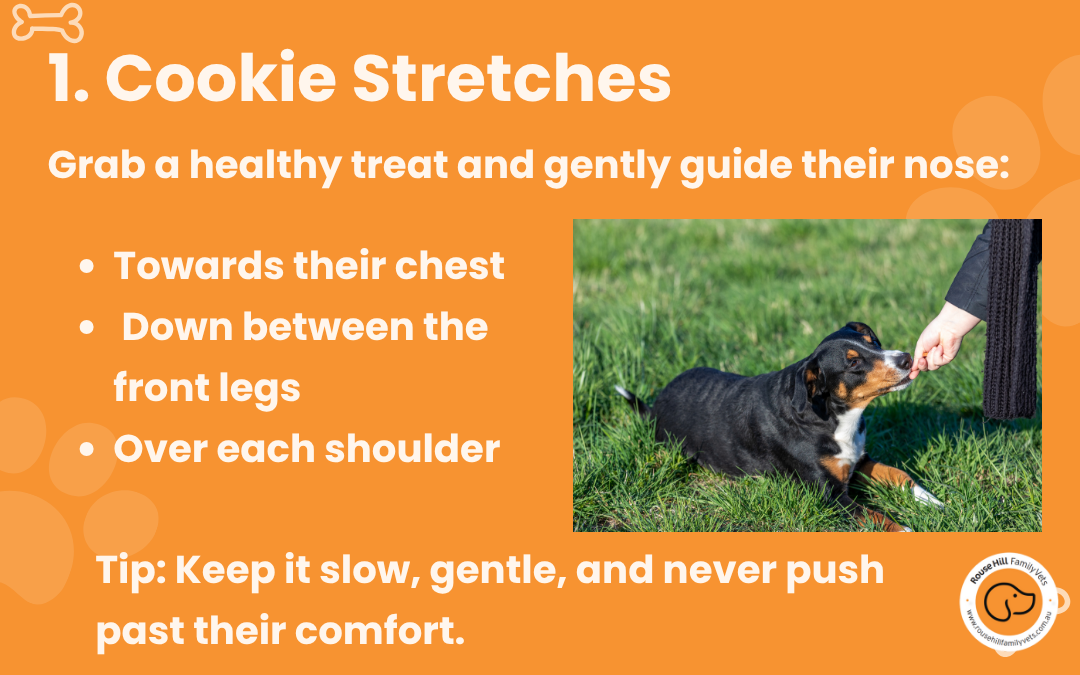
This one is as fun as it sounds. Grab a healthy treat and slowly guide your dog’s nose:
- Towards their chest.
- Down between their front legs.
- Over each shoulder.
This gentle movement stretches your dog’s spine and encourages flexibility through the neck and back. It’s also a lovely bonding activity — your dog thinks it’s just a game with snacks!
Tip: Keep it slow and controlled, and don’t push them further than they’re comfortable.
2. Figure 8s
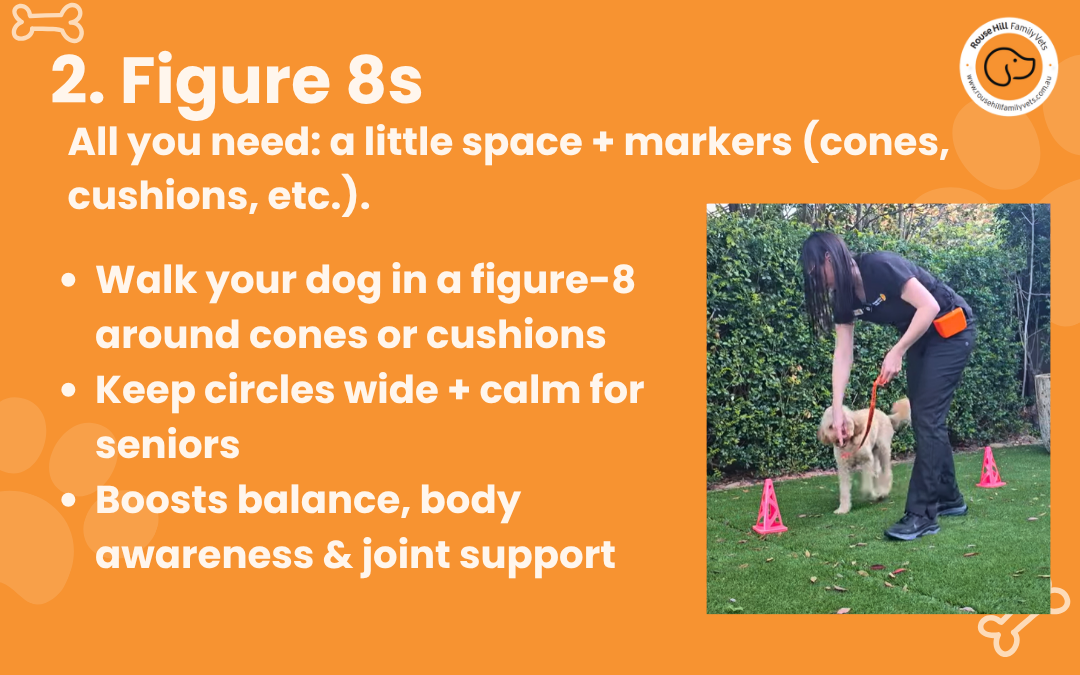
This exercise helps with balance, body awareness, and core strength. All you need is a little space and a few markers (like cushions or cones).
Encourage your dog to walk in a figure-8 pattern around the objects. For senior dogs, keep the circles wide and the pace calm.
This simple movement strengthens stabilising muscles that support the joints — especially important for dogs with arthritis.
3. Paws Up on a Step or Box
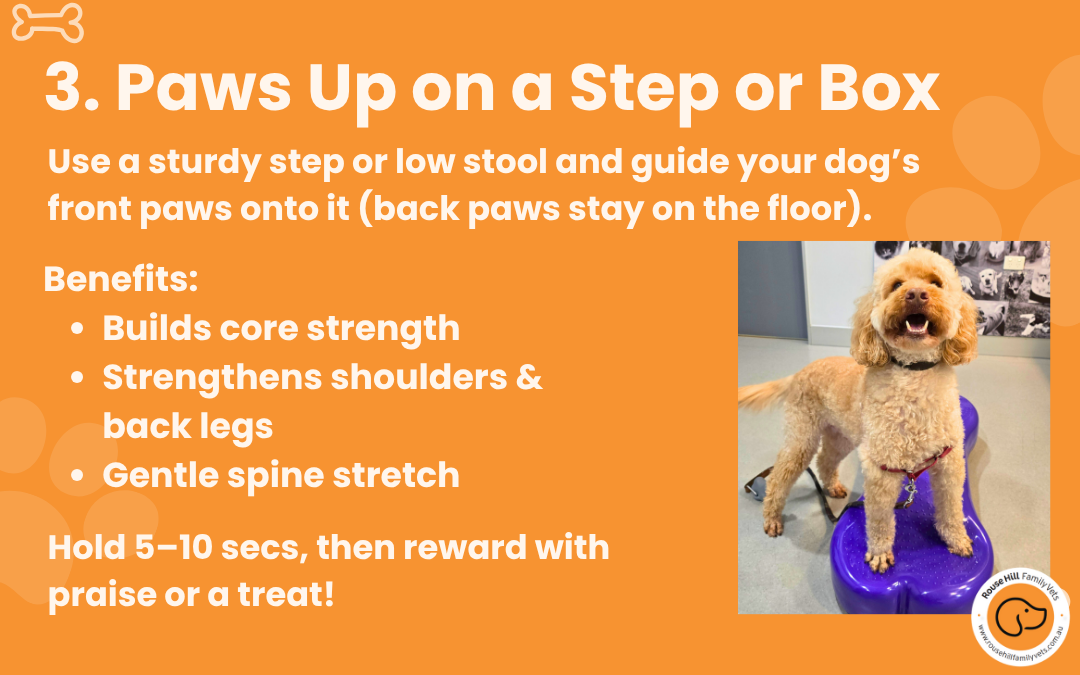
Find a sturdy step, low stool, or box. Gently encourage your dog to place their front paws up on it, while their back legs stay on the floor.
This is a safe way to:
- Engage their core.
- Strengthen their shoulders and back legs.
- Encourage gentle stretching through the spine.
Start with short holds (5–10 seconds) and reward with plenty of praise or a treat.
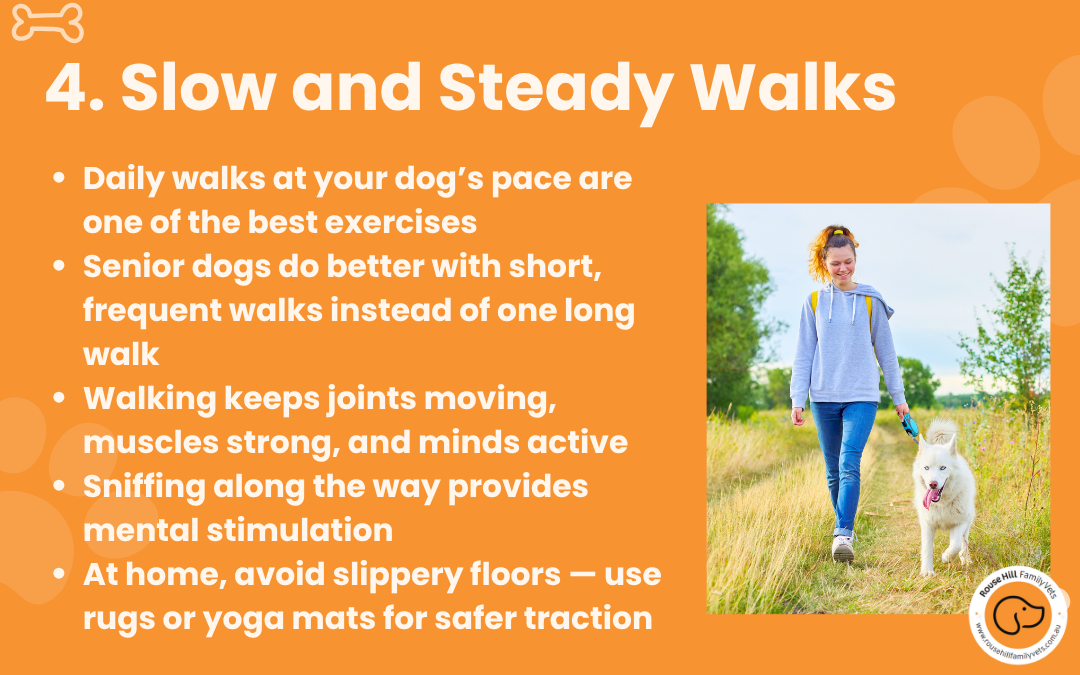
4. Slow and Steady Walks
It sounds simple, but daily walks at your dog’s pace are one of the best forms of exercise. For senior dogs, short and frequent walks are often better than one long outing.
Walking keeps joints moving, muscles engaged, and minds stimulated. Let your dog sniff along the way — sniffing is brain exercise, too!
Tip: Avoid slippery floors at home. If your dog struggles with traction, rugs or yoga mats can make walking easier indoors.
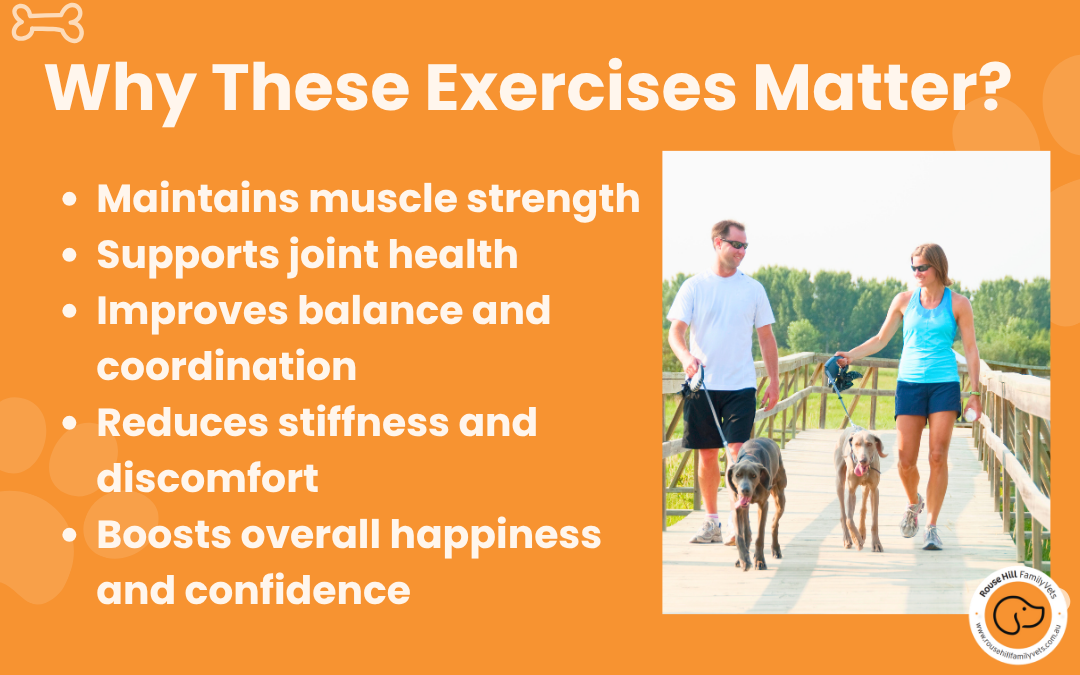
Why These Exercises Matter
Keeping your dog active as they age helps:
- Maintain muscle strength.
- Support joint health.
- Improve balance and coordination.
- Reduce stiffness and discomfort.
- Boost overall happiness and confidence.
And the best part? These exercises don’t just help physically. They also provide mental stimulation and strengthen the bond between you and your dog.
How We Can Help at Rouse Hill Family Vets
Every dog is different. Some need a little more support to stay mobile, especially if arthritis or injury is at play. At Rouse Hill Family Vets, we offer:
- Senior wellness checks to spot mobility issues early.
- Rehabilitation programs tailored to your dog’s needs.
- Acupuncture treatments to relieve pain and improve comfort.
- Weight and diet plans to reduce joint strain.
- Fear Free visits so your dog feels safe and relaxed during their care.
Keep Your Dog Moving — and Loving Life
If your dog is slowing down, don’t assume it’s just age. With the right support, many senior pets enjoy active, joyful golden years.
If you’d like guidance on which exercises are best for your dog, or if you’ve noticed stiffness or changes in mobility, book a check-up with us today.
With just a few minutes a day, you can keep your senior dog moving more freely — and enjoying more of life’s little adventures with you.
Warmly,
Dr Belinda
